
The salt marsh was a home of sorts long before I began making photographs.
Along Cedar Run Dock Road, Great Bay Boulevard, and the many back bays of southern New Jersey, I’ve returned through seasons, historic storms, and tidal inundation. From quiet ordinary evenings to bombastic sunsets blazing across the sky. New Jersey salt marshes are part of a wider Mid-Atlantic coastal system of plants and wildlife. A remarkable ecosystem where water, weather, vegetation, migratory wildlife come together in tension and in harmony with our very own human footprint.
I have documented my New Jersey salt marsh photography journey for over a decade at the time of publication (Nov 2026). Sometimes recognizable, sometimes transformed by movement or light, these are places I know well but will never understand completely. With each return it is somehow like the first time and the thousandth time.
The Wareham Land Trust describes best our beloved salt marshes,
Salt marshes are among the most productive ecosystems on Earth, even surpassing many types of agricultural land. These coastal wetlands are typically found in intertidal zones, such as behind barrier beaches, along the banks of tidal rivers, or bordering sheltered waters, where they thrive in the ebb and flow of the tides.
Welcome to the salt marsh
A salt marsh is more than some flat, grassy, buggy, sulfur smelling coastal wetland, and it is certainly much more than the muck and mire. Sedge grasses, single-lane roads, signs both municipal and homemade, and ever-changing light and sound battle the senses for attention. In returning to the marsh I find new ways to learn from this place. New ways to see. The marsh is a teacher of lessons. And on the marsh that lesson is familiarity in the face of impermanence.


A cycle of growth and changing perspectives
No season holds a monopoly on a salt marsh landscape. While we each have our favorites, each has its own identity. A different sky, tide, or angle can disrupt the familiar. Return often enough and you’ll see the sky as a clock; in winter the sun sets in the southwest only to track toward the west, northwest in summer. It wasn’t until my time as a landscape photographer that I truly understood just how much the sun moved because of earth’s axial tilt.


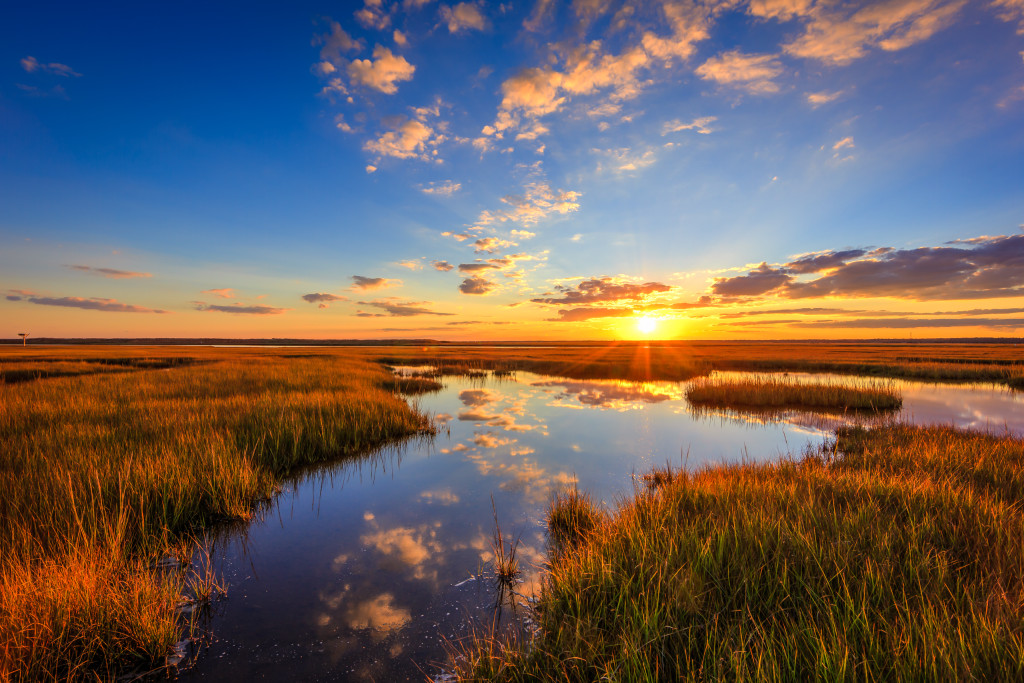


Treading familiar ground
While natural ecosystems first and foremost, New Jersey salt marshes share space with our fellow humans. Pilings, wooden bridges, raised houses, and weathered cedar shakes bear the scars of use and time, a firm visual reminder that time is undefeated.


Wind, weather, and winter salt marsh photography
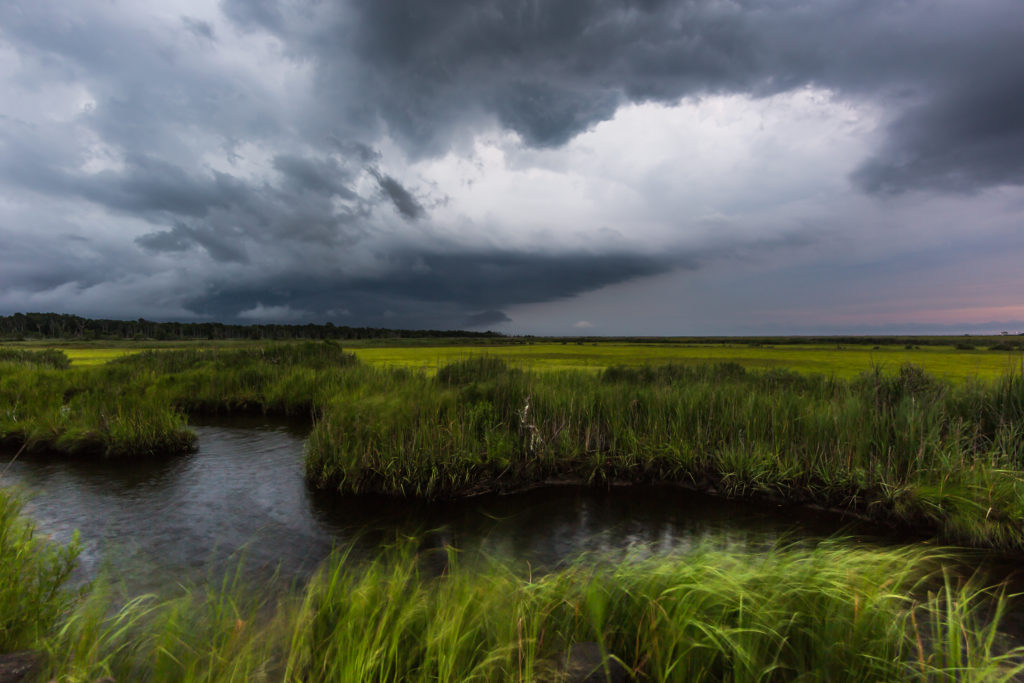
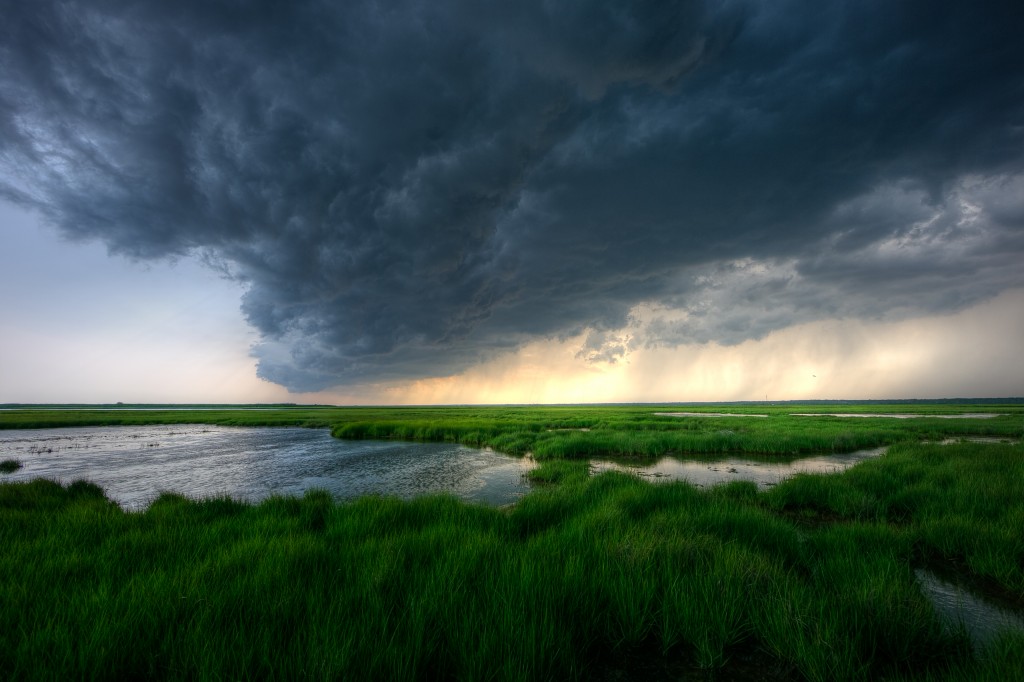
Salt marshes transform with the weather. Winds press through the marsh grasses, in a dance that somehow seems both choreographed and chaotic. Winter transforms the landscape, and the difference between a quiet evening and an extraordinary one can be only minutes. And when a thunderstorm barrels across the salt marsh the drama is striking.




Tides, roads, and human traces
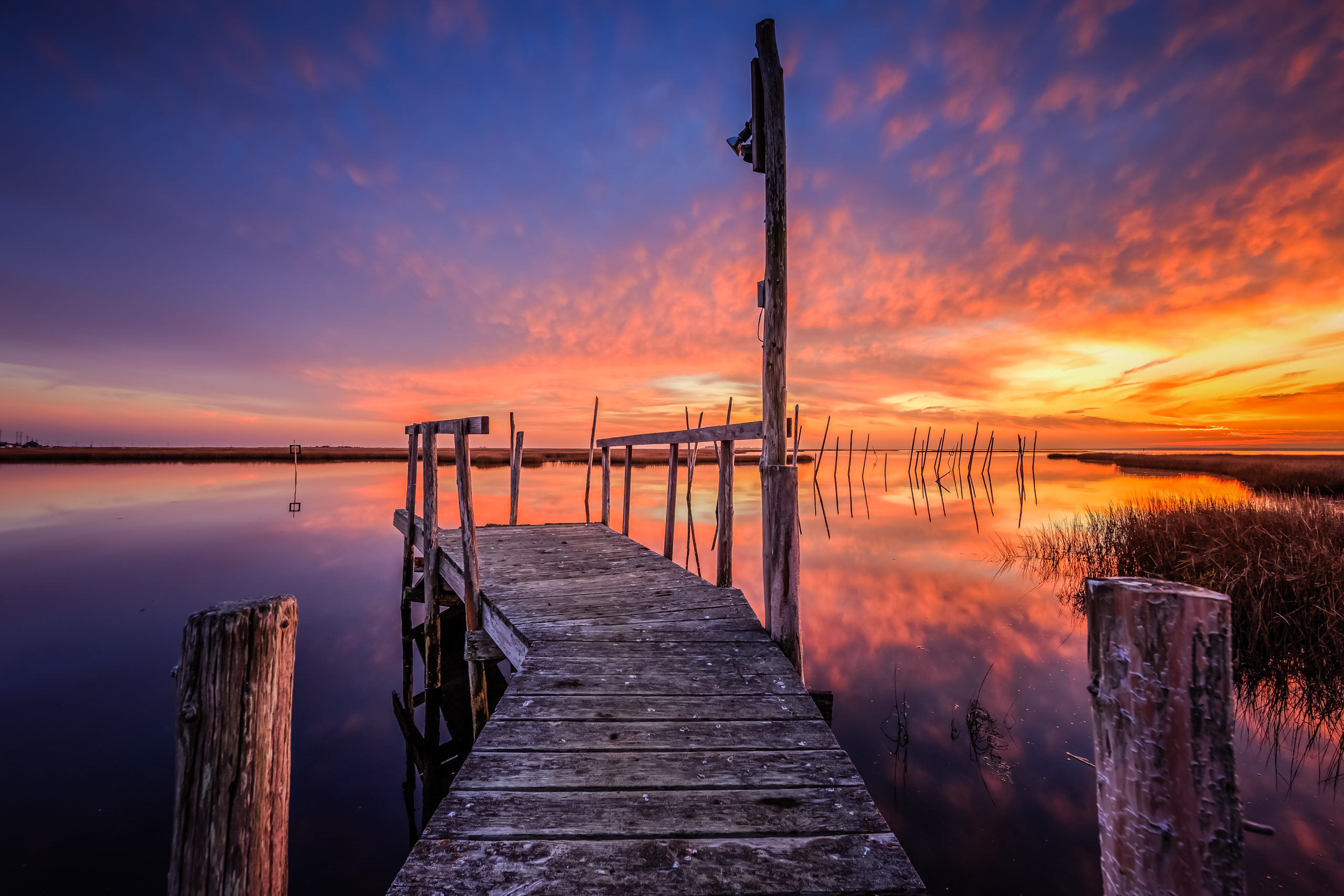
Tide and weather know few boundaries and surely disregard the relatively arbitrary ones people create. Roads, ramps, and deteriorating waterfront structures speak of the push-pull between nature’s will and our best efforts to contain it.


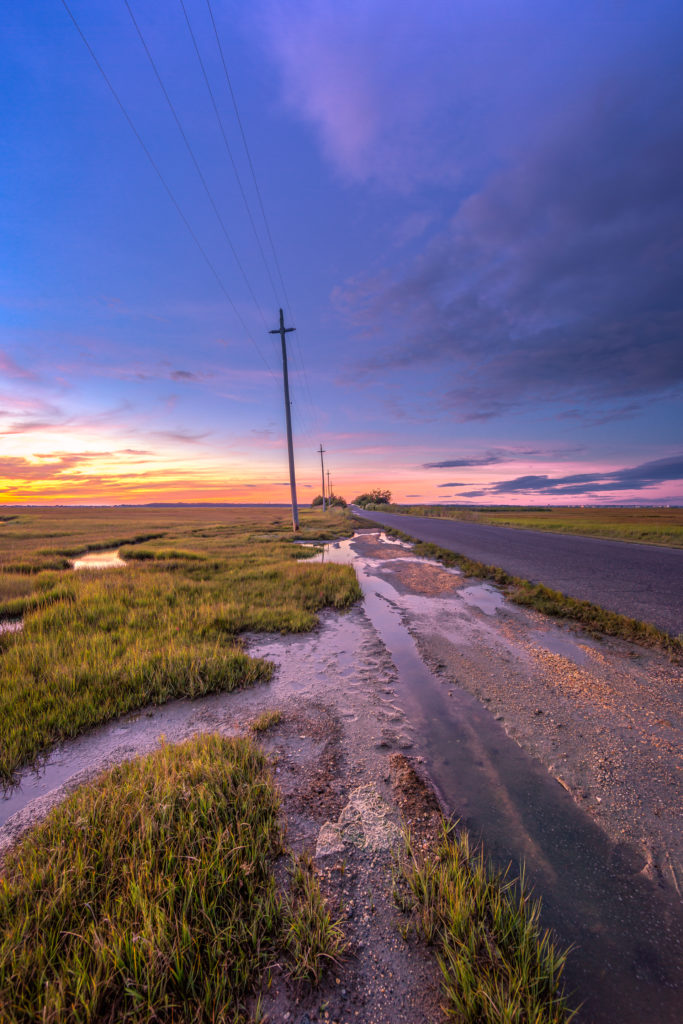


Movement, stillness, and return
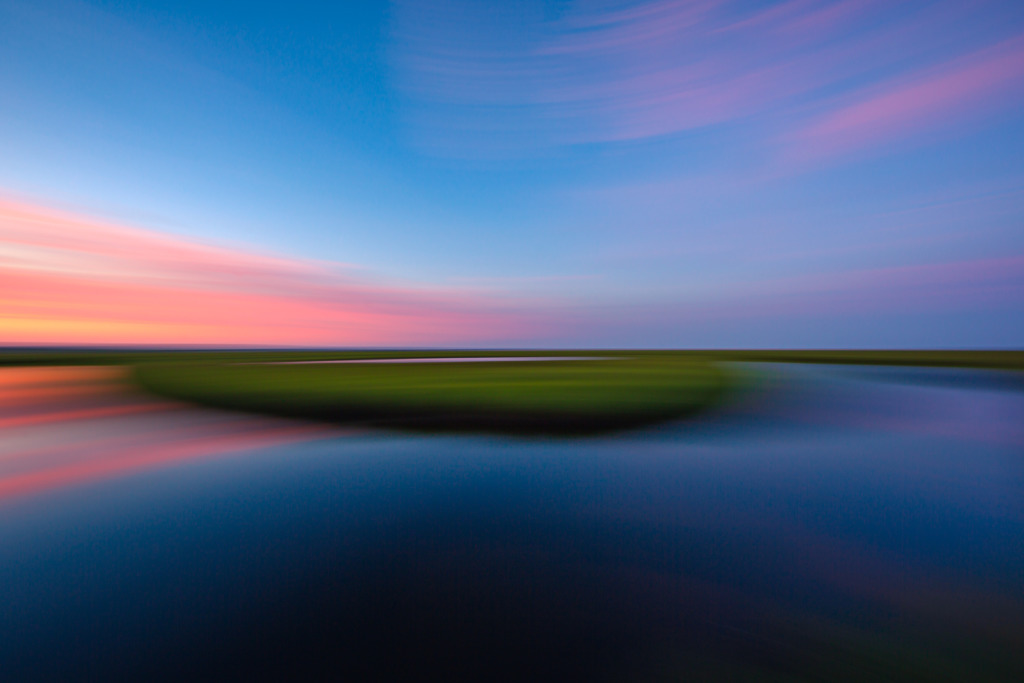
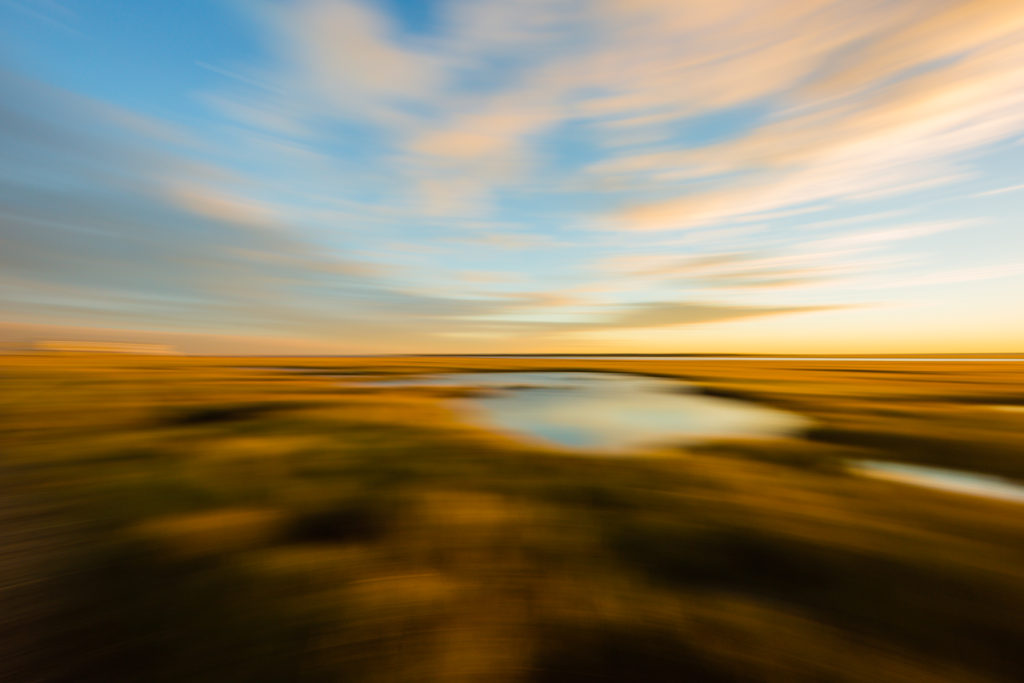
It’s not all storms, power, flooding, and decay. The eye, mind, and soul most often return to find a place of deep peace and quiet: a reflection, a moon, an opening in the marsh. The long needed exhale of serenity is seldom further than a day away.




A landscape that never holds still
If I have a geographic center, the salt marsh is undoubtedly it. Mountains literally take your breath away, the forests are portals into more ancient and esoteric forms of earthly magic, but it is the salt marsh that sets my soul ablaze. It finds you different and yet somehow the same with every visit. Across decades of weather, tides, seasons, and photographs, the cumulative work becomes a record of attention. A lifetime in a landscape.