
The salt marsh was familiar ground to me long before I began making photographs.
Along Cedar Run Dock Road, Great Bay Boulevard, and the back bays of southern New Jersey, I’ve returned through seasons, historic storms, and tides; from ordinary evenings to banger sunsets blazing across the sky. New Jersey salt marshes are part of the wider Mid-Atlantic coastal system. A remarkable, if understated ecosystem where water, weather, vegetation, migratory wildlife come together in tension and in harmony with our very own human footprint.
My New Jersey salt marsh photography follows the quietest quintessential east coast landscape for over a decade. Sometimes recognizable, sometimes transformed by movement or light, these are places I know well but will never understand completely.
I keep returning because familiarity has never exhausted what there is to see.
Welcome to the Mid-Atlantic salt marsh
A salt marsh is more than some flat, grassy, buggy and sometimes smelly coastal wetland, and it is certainly much more than the much and mire. Sedge grasses, single-lane roads, signs both municipal and homemade, and ever-changing light compete for attention. In returning to the marsh I find new ways to learn from this place. New ways to see. And like the best teachers, it knows how to meet you where you are at in order to communicate lesson. And on the marsh that lesson is familiarity in the face of impermanence.


A cycle of growth and changing perspectives
No season holds a monopoly on a salt marsh landscape. Each has its own identity. A different sky, tide, or angle can disrupt the familiar. Return often enough and the big flat open horizon cements the sky clock in your mind, as you witness the spot the sun sets move greatly from the southwest to western sky as we travel back and forth from summer to winter.


Treading familiar ground
While natural ecosystems first and foremost, New Jersey salt marshes share space with our fellow humans. Pilings, wooden bridges, raised houses, and weather cedar shakes bare the scars of use and time, a firm visual reminder time is undefeated.


Wind, weather, and winter
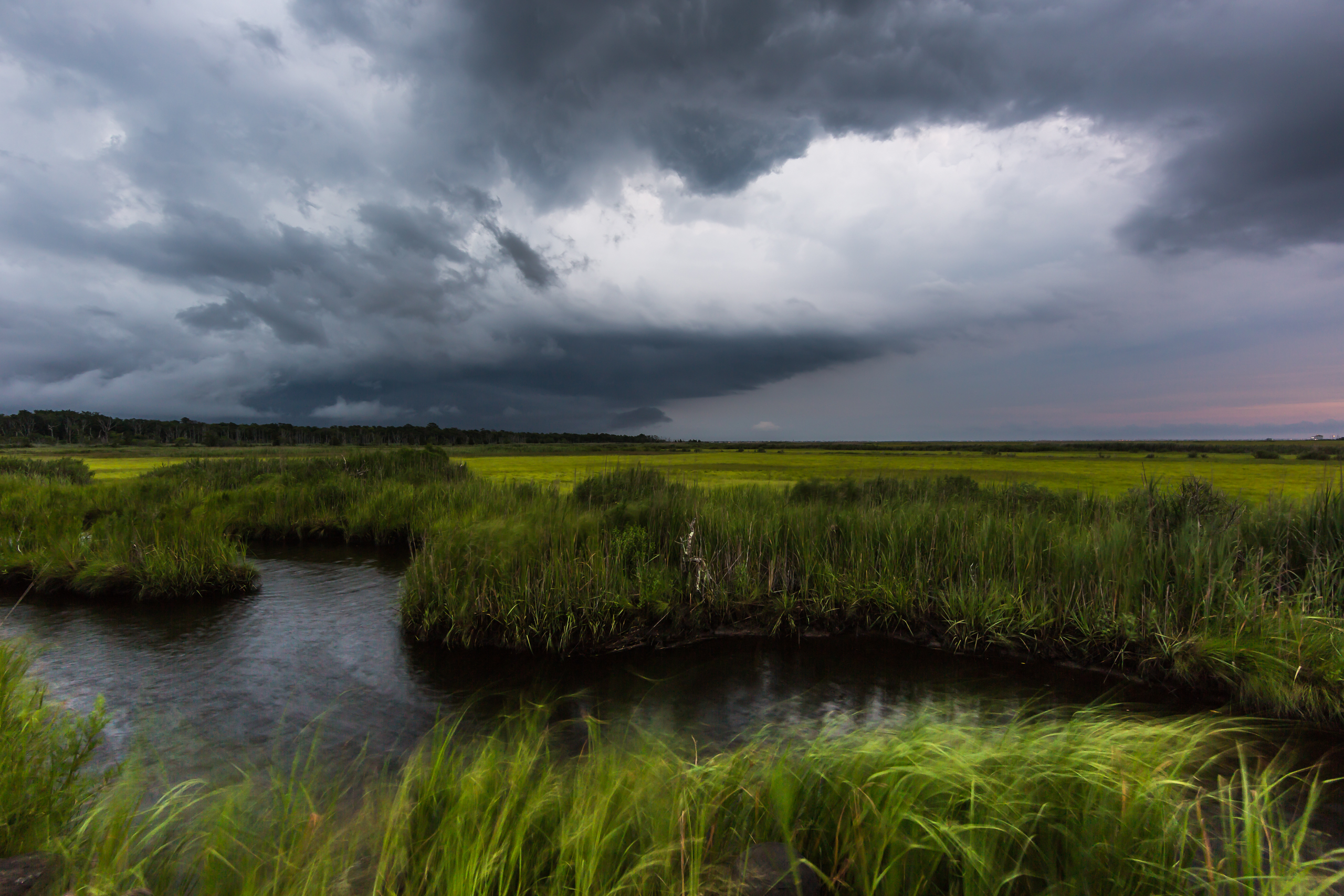
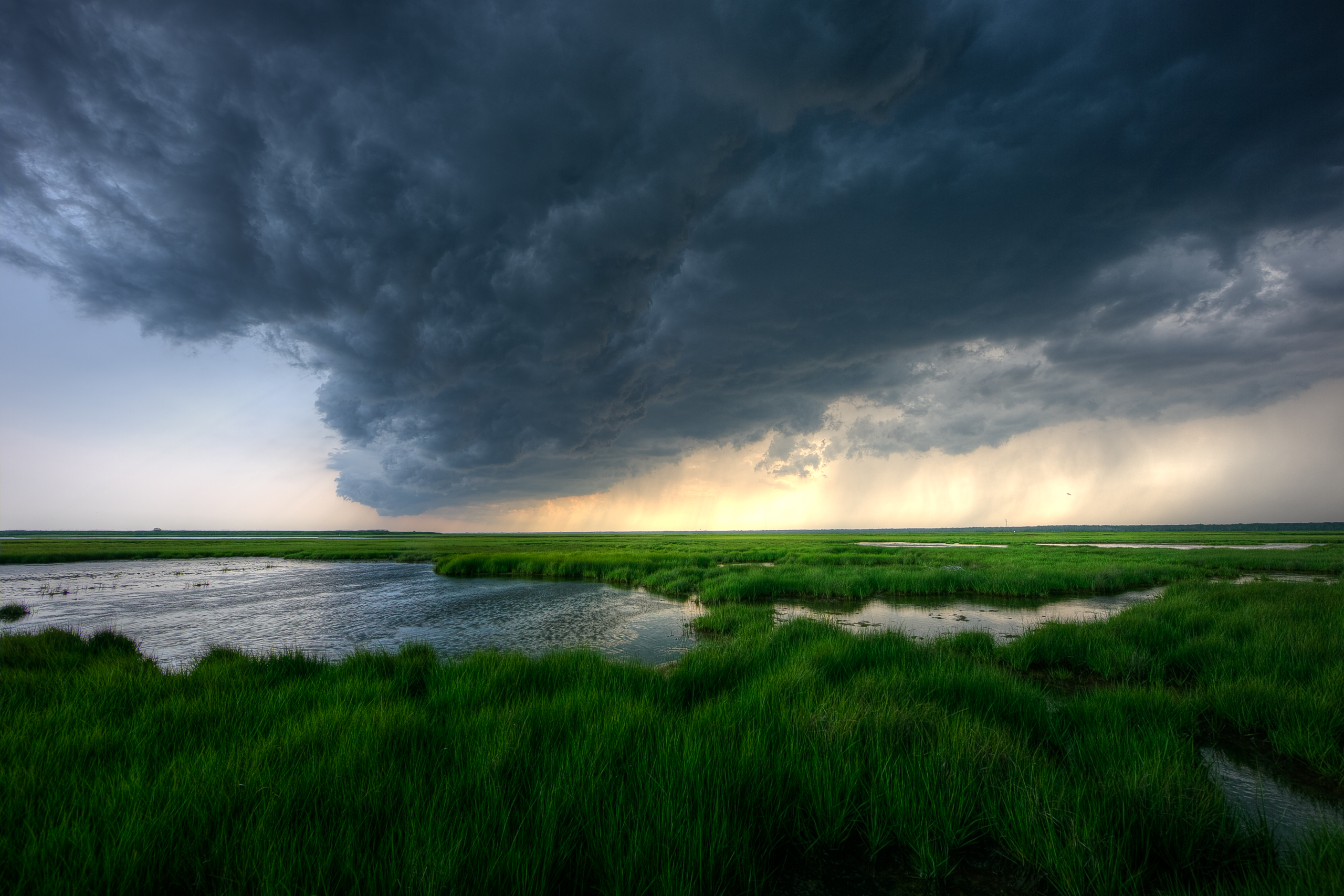
Salt marshes transforms with the weather. Wind press through the marsh grasses, in a dance that somehow seems both choreographed and chaotic. Winter transforms the landscape, and the difference between a quiet evening and an extraordinary one can be only minutes. And when a thunderstorm barrels across the salt marsh the drama is striking.



Tides, roads, and human traces
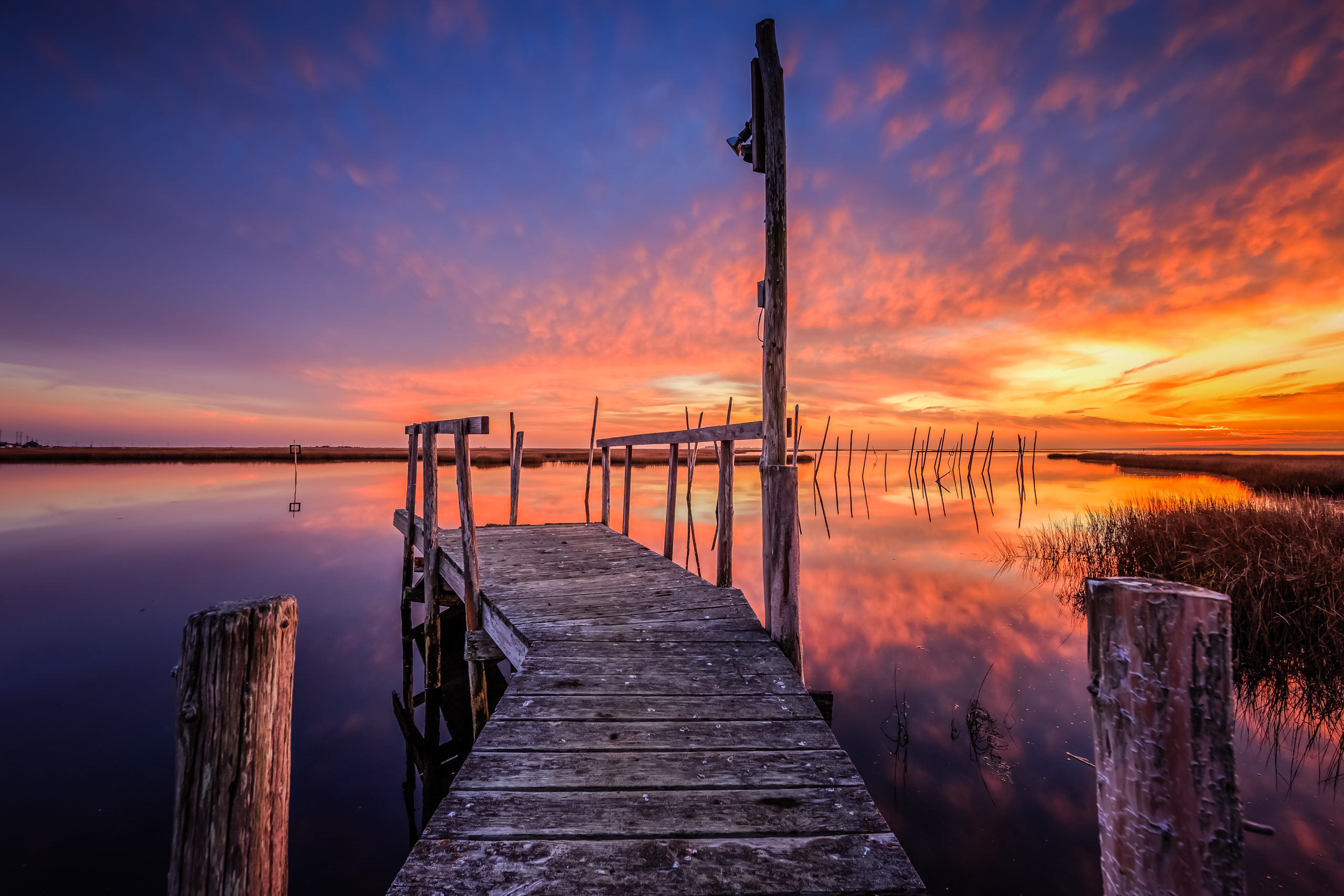
Tide and weather know few boundaries and surely disregard the relatively arbitrary ones people create. Roads, ramps, and deteriorating waterfront structures speak of the push pull between nature’s will and our best efforts to contain it.


Movement, stillness, and return
It’s not all storms, power, flooding, and decay, the eye, mind, and soul most often return to find a place of deep peace and quiet: a reflection, a moon, an opening in the marsh. The long needed exhale of serenity is seldom further than a day away.


A landscape that never holds still
If I have a geographic center, the salt marsh is undoubtedly it. Mountains literally take your breath away, the forests are portals into a more ancient and esoteric forms of earthly magic, but it is the salt marsh that sets my soul ablaze. It finds your different and yet somehow the same with every visit. Across decades of weather, tides, seasons, and photographs, the cumulative work becomes a record of attention. A lifetime in a landscape.